
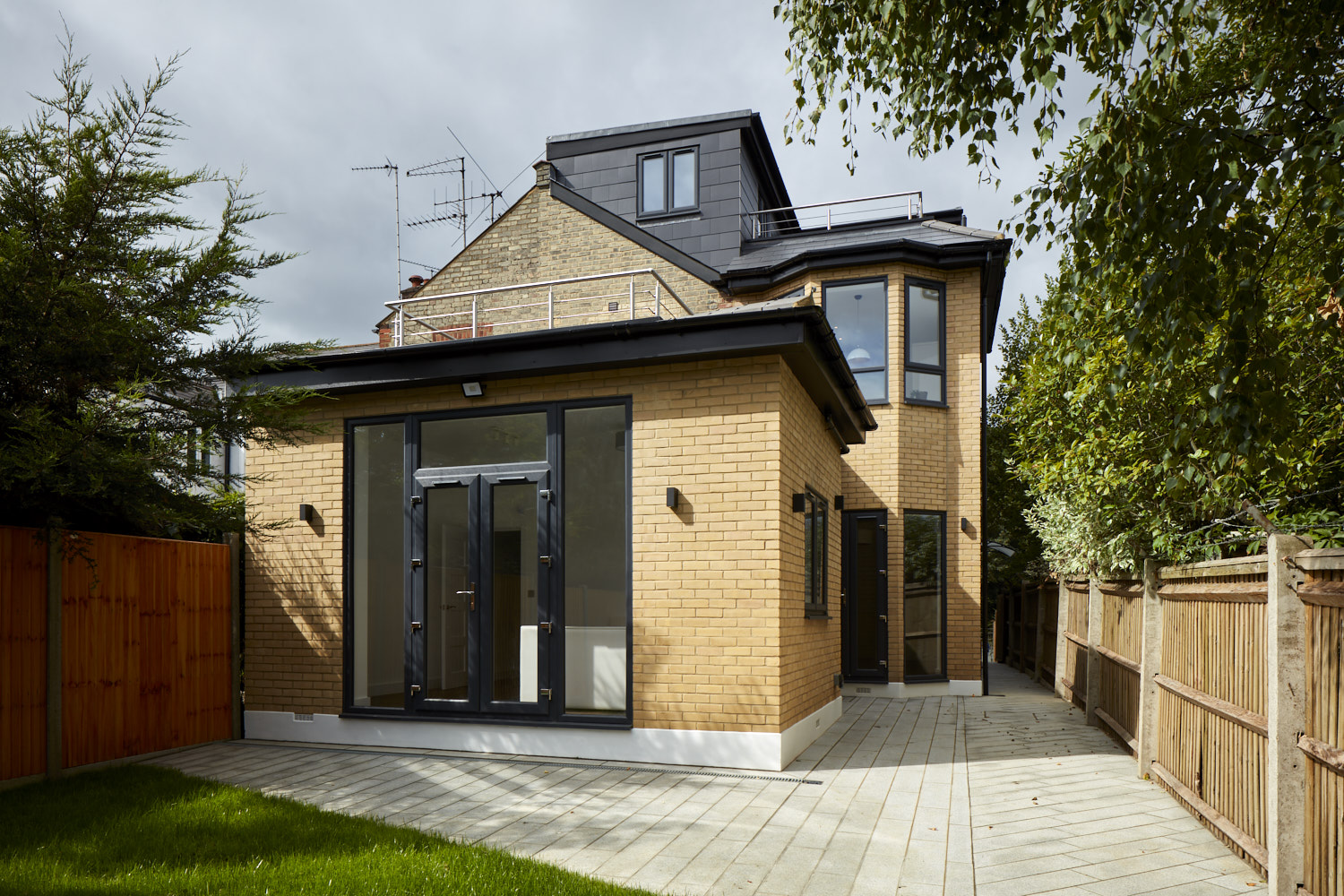
Over the last few years we have seen a steady increase in enquiries for loft conversions across Finchley, East Finchley, Muswell Hill, Barnet and the surrounding areas. Homeowners who might once have sold up and moved to a bigger house are now choosing to stay put and convert instead. The reasons are practical rather than sentimental, and they come down to cost, disruption and what people actually get for their money once all the numbers are added up.
The cost of moving has gone up sharply
Stamp duty, estate agent fees, solicitor costs and the general upheaval of moving now add up to a substantial sum before a family even sees a removal van. On a typical North London family home, stamp duty alone can run into tens of thousands of pounds. When you compare that outlay against the cost of a loft conversion that adds a bedroom and often a bathroom, converting frequently comes out as the better financial decision, particularly for families who are otherwise happy with their location, school catchment and neighbours.
Space is at a premium across North London
Many of the terraced and semi-detached houses across Barnet, Haringey and Camden were built with three bedrooms and a single bathroom, which no longer suits how most families live. A loft conversion is often the only realistic way to add a fourth bedroom or a proper master suite without extending into the garden, which some homeowners are reluctant to sacrifice, particularly where garden space is already limited. Converting the loft uses space that is otherwise wasted for storage and turns it into genuinely useful living area.
It adds real value to the property
Estate agents in the area consistently report that a well-executed loft conversion adds a meaningful percentage to a property's value, often more than the conversion itself cost to build. Adding a bedroom and bathroom typically shifts a house into a different bracket when it eventually comes to sell, which makes the investment attractive even for homeowners who are not planning to stay forever. This is one of the few home improvements that reliably pays for itself.
Working from home has changed what people need
Since the shift towards hybrid and remote working, many homeowners want a dedicated office space that is separate from family living areas. A loft conversion is well suited to this, offering a quiet room away from the noise of the rest of the house, often with better natural light than a converted box room downstairs. We have converted a number of lofts specifically to create home offices, sometimes alongside a small extra bedroom.
- Compare the total cost of moving, including stamp duty and fees, against the cost of converting
- Check your roof's ridge height and pitch early to confirm the conversion is viable
- Decide whether you need an en suite, which adds plumbing costs but adds more value
- Ask whether your project falls under permitted development or needs full planning permission
- Get a structural engineer involved before finalising the design
- Speak to a local estate agent about how much value a loft conversion adds on your street
Most of our clients tell us the same thing, they looked at moving first and the numbers simply did not stack up once stamp duty and fees were included. Converting the loft gave them the extra room they needed without leaving a house and area they were already happy in.
If you are considering a loft conversion in North London, Hozea Construction can assess your roof space and provide a free fixed-price quote. Call 07969 378509 or visit our office at 66 Fitzalan Road, Finchley N3 3PE to discuss your options.
Common questions
- Is a loft conversion cheaper than moving house?
- In most cases, yes, once stamp duty, estate agent fees and solicitor costs are added to the cost of a larger property. A loft conversion adds a bedroom or bathroom for a fraction of the cost of moving to a bigger house in the same area.
- How much value does a loft conversion add?
- It varies by property and location, but a well-executed loft conversion typically adds a meaningful percentage to a house's value, often more than the build cost, particularly where it adds a genuine extra bedroom and bathroom.
- How long does a loft conversion take?
- Most straightforward loft conversions take around six to eight weeks, with more complex dormer or hip-to-gable conversions taking longer depending on structural work and planning requirements.