
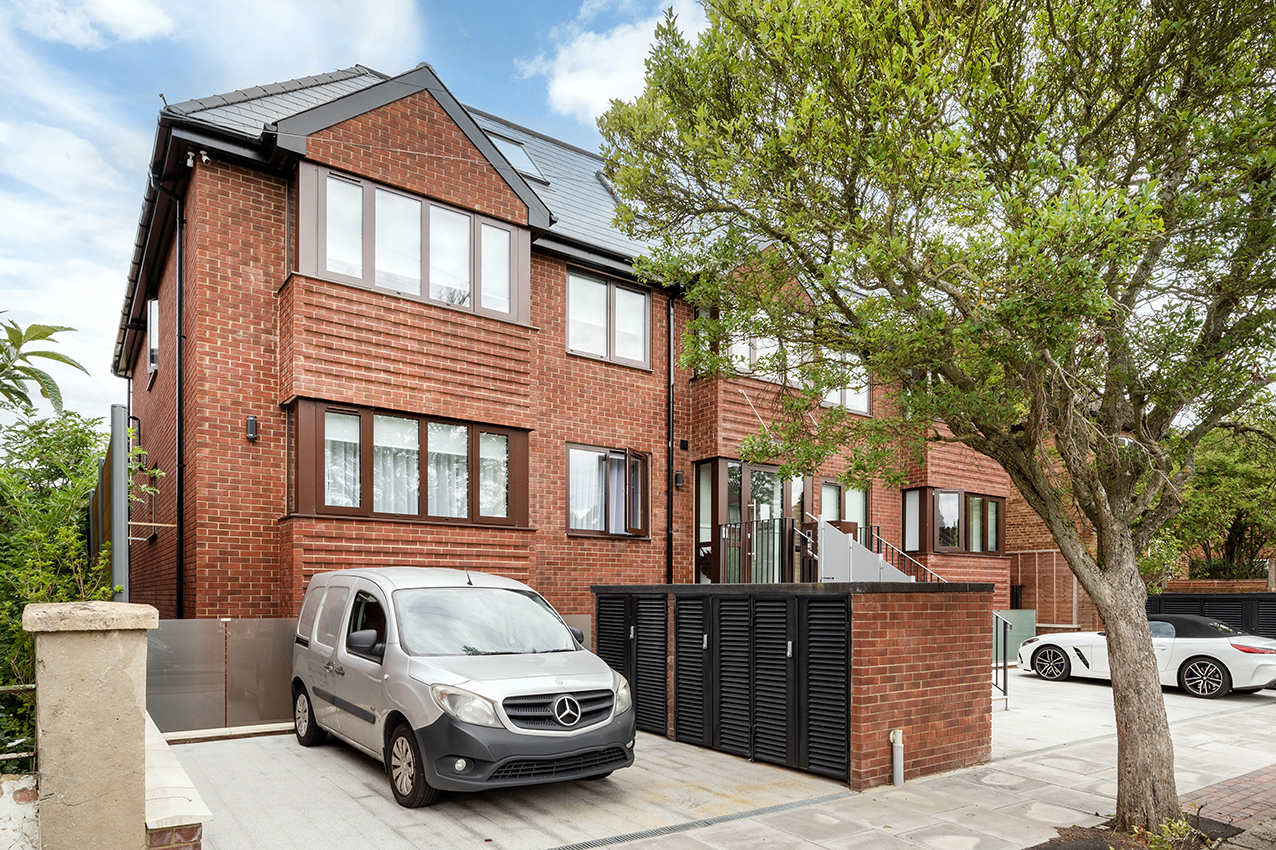
A self build or new home project can be one of the most rewarding things you do to your finances and your family life, but it comes with its own set of challenges that catch out even experienced buyers. Whether you are buying off plan or building from scratch on a plot in North London, getting the basics right early saves money and stress later.
Here is our practical guide to the things worth checking before you commit, based on what we see going wrong, and going right, on projects across Barnet, Camden and the surrounding boroughs.
Get your finances and price expectations straight
Buying off plan means committing before building is finished, sometimes before it has started. Compare prices with similar developments locally and speak to an independent estate agent for a realistic view of value. Do not assume a property will automatically be worth more once complete. Build in a contingency of at least ten to fifteen per cent on top of any quoted build costs, since ground conditions, material price changes and design tweaks almost always add cost somewhere along the way.
Understand exactly what is included
When buying off plan there is often little to see, so find out precisely what is covered in the price. Does it include garden landscaping, a parking space, white goods or flooring? If you are buying a flat, check the service charge and ground rent carefully, since these ongoing costs affect affordability just as much as the purchase price.
Treat show homes and renders with a healthy dose of scepticism
Show homes are a sales tool, dressed with minimal, scaled down furniture to make rooms look larger and brighter than they will feel once lived in. Your actual plot may face a different direction, sit on a different floor, or back onto a road, all of which affect light and noise. Ask how many other homes in the development have sold, and the mix of owner occupiers versus investors and tenants, so you know what living there will actually be like.
Check warranties and the builder's track record
Any builder or developer should be signed up to a recognised warranty scheme such as NHBC Buildmark, Premier Guarantee or LABC Warranty. This protects your deposit if the developer runs into financial difficulty and confirms the home meets agreed technical standards. Never proceed without one. If you are self building rather than buying, insist on a written contract, a fixed-price schedule of works and evidence of your builder's insurance and previous projects.
Protect your mortgage position
Mortgage offers typically last three to six months. If completion runs beyond that, you may need to reapply, and lenders can refuse a second time if your circumstances have changed. Avoid changing jobs, taking on new credit or making large purchases while your build or purchase is ongoing.
- Confirm the warranty provider and read the small print on what is covered
- Get a full specification in writing, including fixtures, fittings and finishes
- Ask about the completion timeline and what happens if it slips
- Check party wall and boundary matters early if building close to neighbouring plots
- Budget for external works such as driveways, fencing and landscaping separately
Ask the right questions about extras
You may only take on a self build or new home purchase once in your life, so find out what extras can be negotiated, whether that is additional sockets and light fittings, upgraded flooring, or a say in colour schemes and finishes. It rarely hurts to ask, and small concessions often cost the builder little relative to the value they add for you.
If you are planning a self build, a substantial extension, or a new home in North London and want a straightforward, fixed-price approach from people who manage every trade on site, get in touch with Hozea Construction on 07969 378509 for a free quote.
Common questions
- Is a warranty scheme legally required for new builds?
- It is not a legal requirement, but most mortgage lenders will insist on a recognised warranty such as NHBC Buildmark before they will lend on a new build property. It is standard practice and protects both your deposit and the ongoing structural quality of the home.
- How much contingency should I budget for a self build?
- A contingency of ten to fifteen per cent of the total build cost is a sensible minimum, covering unforeseen ground conditions, material price rises and small design changes. Larger or more complex builds, including basement or excavation work, warrant a higher contingency.
- What is the biggest mistake self builders make?
- Underestimating timescales and cash flow is the most common issue. Delays in planning, party wall agreements or material supply can stretch a project well beyond the original schedule, so it pays to plan finances and living arrangements around a realistic, longer timeline.