
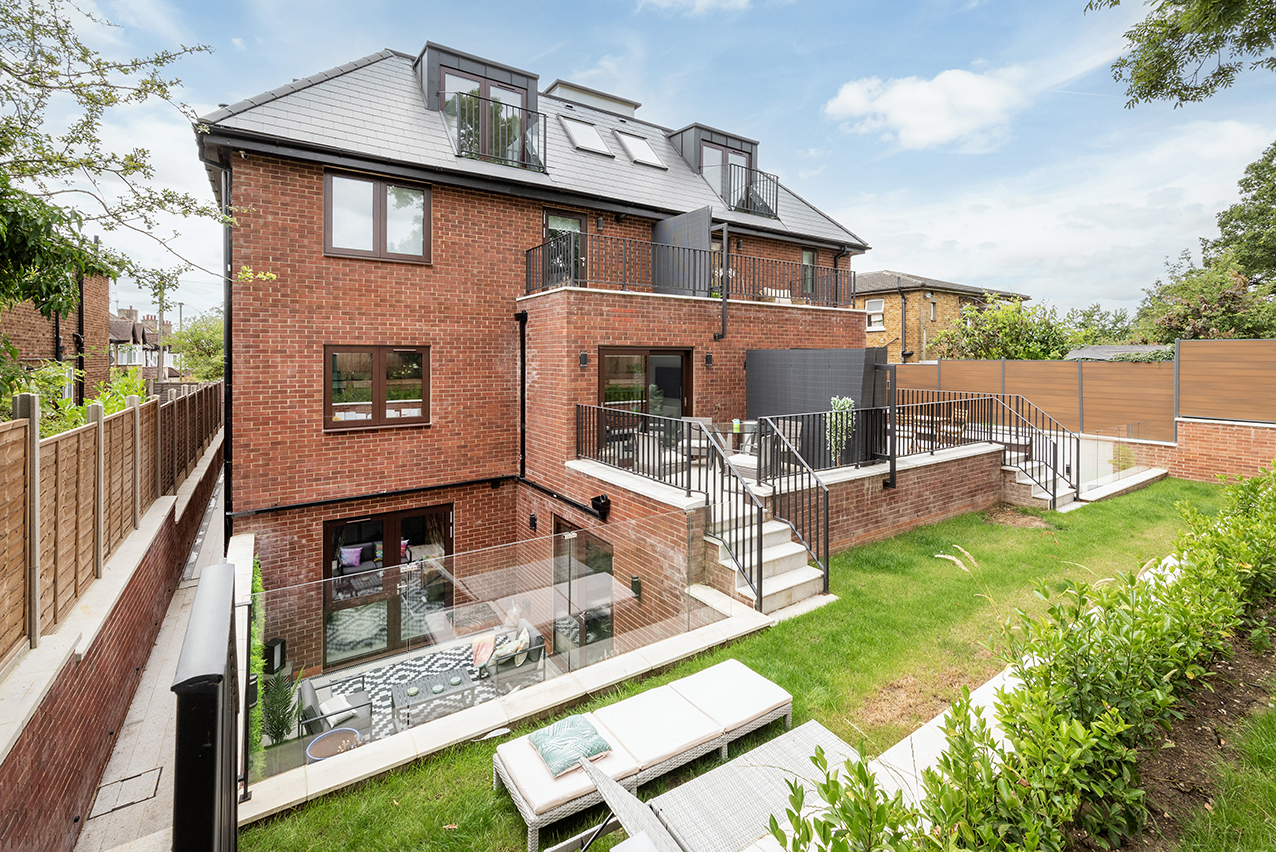
Whether a new build or an older property suits you better in North London comes down to what you value most: low maintenance and a finished product, or space, character and the ability to shape a home over time. Both routes have real trade-offs, and both can turn out to be a good buy or a costly mistake depending on what you check before you commit.
What you get with a new build
A new build in North London typically comes finished and compliant with current building regulations, so you can move in without immediate work. There is no chain to worry about if you buy directly from the developer, and new homes carry a structural warranty, usually for ten years, covering major defects. Fittings, insulation and heating systems are new, which keeps running costs down in the short term.
The trade-off is usually space. Plot sizes and room dimensions on modern developments are often tighter than on older properties, and gardens and parking can be limited. Estates can also feel uniform, with little scope to change the exterior in the early years while any estate management scheme is in place.
What you get with an older property
Victorian, Edwardian and 1930s houses, which make up much of the housing stock across Barnet, Haringey, Camden and Islington, tend to offer higher ceilings, larger room proportions and period features that are expensive to replicate in a new build. Land is often more generous too, particularly with rear gardens suitable for a single storey extension or a loft conversion later.
- Older homes may need rewiring, replumbing or a new boiler within a few years of purchase
- Single glazing and poor loft insulation are common in unmodernised period stock
- A structural survey (not just a mortgage valuation) is worth the cost on any pre-1950s property
- Check for damp, roof condition and any signs of movement or historic underpinning
- Conservation area status can restrict what you are allowed to change externally
- Extensions and loft conversions can often add significant living space if the plot allows
Planning and future improvement potential
If you are buying with an eye on future improvements, an older house on a decent plot generally gives you more scope. Permitted development rights allow many single storey rear extensions and loft conversions without full planning permission, though this varies by property type and whether you are in a conservation area or have an article 4 direction removing those rights. A new build on a small modern plot may leave little room to extend at all, and any estate covenants can further restrict alterations.
Costs to factor in either way
New builds can carry a price premium compared with equivalent older stock nearby, reflecting the convenience of moving in ready to live. Older properties may look cheaper per square foot but often need a renovation budget on top, covering rewiring, replumbing, insulation upgrades and general repair. Always get a proper survey done before exchange, whichever route you choose, so any structural or compliance issues are priced in rather than discovered afterwards.
We are regularly called in shortly after completion to fix issues a full structural survey would have flagged. Whatever type of property you are buying, spend the money on a proper survey rather than relying on the mortgage valuation alone.
If you have bought an older North London home and want to know what is realistically possible with an extension, loft conversion or full renovation, get in touch with Hozea Construction for a free fixed-price quote. Call 07969 378509 to talk through your plans.
Common questions
- Is it cheaper to buy an old house and renovate, or buy new?
- It depends on the property and the scope of work needed. A period house often has a lower purchase price but can need significant investment in services and insulation, while a new build costs more upfront but needs little immediate spending. Add up realistic renovation costs before comparing the two on price alone.
- Can I extend a new build home in North London?
- Sometimes, but plot sizes are often smaller and estate covenants may restrict alterations for a set period after purchase. Check the title deeds and any management company rules before assuming you will be able to extend later.
- What survey should I get on an older North London property?
- For anything built before around 1950, or any property showing signs of damp, cracking or previous alterations, a full structural (building) survey is worth having rather than a basic homebuyer's report. It gives a much clearer picture of the condition of the roof, walls and foundations.