
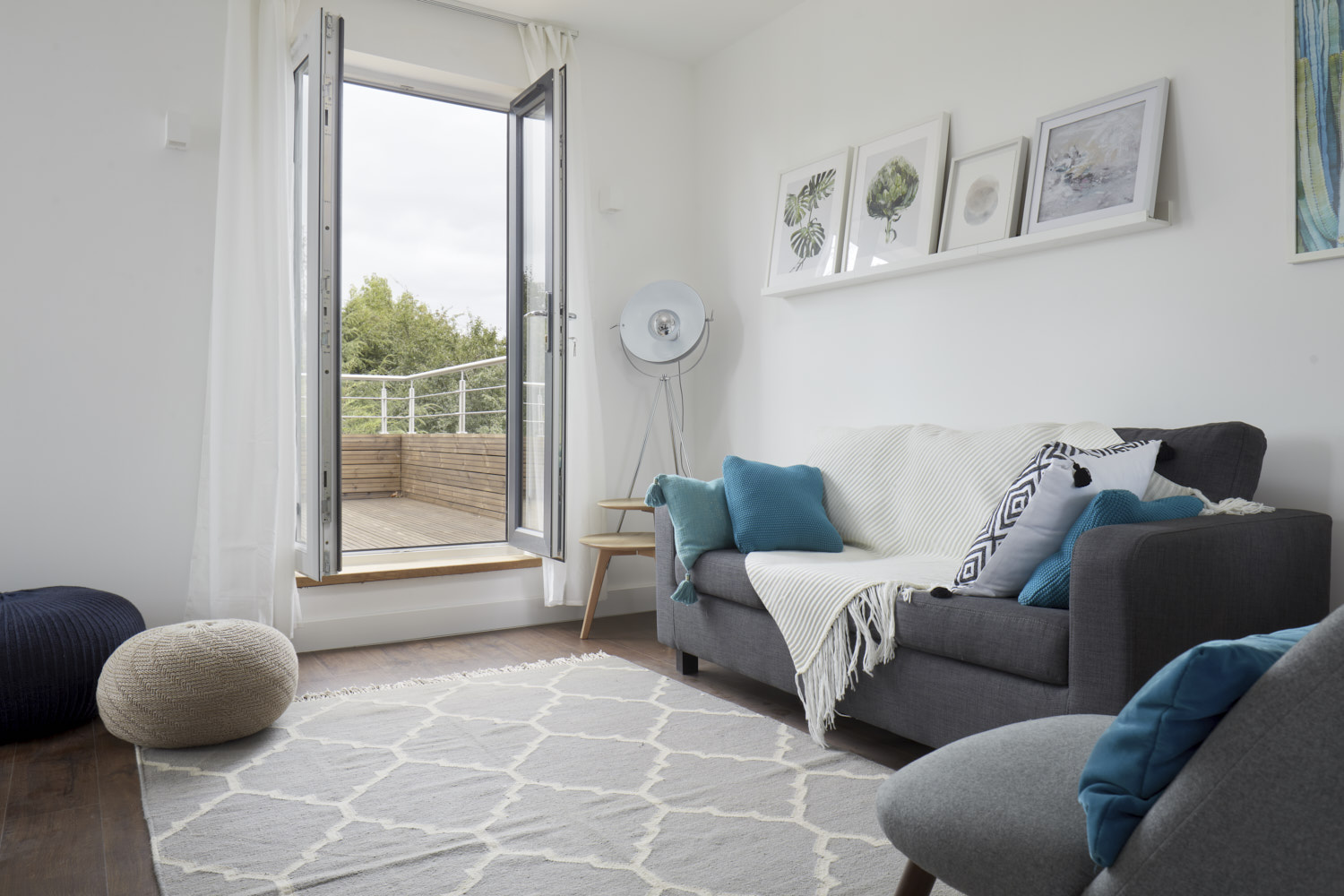
Trends come and go, but good interior design is built on a few things that never really change: how light moves through a space, how rooms connect to each other, and how materials wear over time. Whether you are refreshing a Victorian terrace in Islington or finishing a new extension in Barnet, focusing on these fundamentals gives a better result than chasing the latest look.
Work with the light you have
Most North London terraces run front to back with rooms on one side, meaning natural light varies significantly through the day. Rather than fighting this, plan room use around it. Kitchens and living spaces at the rear benefit from bigger openings such as bifold or sliding doors onto the garden, while darker front rooms often work better as studies, snugs or formal dining spaces where softer light suits the mood.
Keep sightlines open
Where structural work allows, removing unnecessary internal walls between kitchen, dining and living areas creates a sense of space that a series of small rooms cannot match, even without adding square footage. This is one of the most common requests we get on renovation projects, and it usually involves a structural beam and building control sign-off, so it needs planning early rather than treated as a late addition.
Choose materials that age well
Natural materials such as timber, stone and quality tile generally look better over time than synthetic alternatives, which can show wear quickly in high traffic areas. In kitchens and bathrooms particularly, spending more on flooring and worktops that will be used daily for a decade or more is usually better value than economising there and spending on decorative items that are easy to change later.
Respect the period of the property
Victorian and Edwardian houses have proportions and details, such as skirting height, cornicing and fireplace surrounds, that suit a certain scale of furniture and decoration. Stripping all of this out in favour of a completely minimalist look can leave a room feeling oddly proportioned. Retaining or restoring original features and pairing them with simpler, contemporary furnishings tends to give the best of both worlds.
Practical layout mistakes to avoid
- Positioning a sofa so it blocks the natural walking route through a room
- Choosing kitchen layouts that put the sink, hob and fridge too far apart
- Ignoring storage until after the design is finished, leading to bolt-on solutions later
- Ordering flooring or tiles without seeing a large sample in the actual room light
- Underestimating how much natural light is lost once furniture and curtains are added
Lighting layers matter more than one big fitting
A single central ceiling light rarely does a room justice. Combining ambient lighting (general room light), task lighting (over a worktop or desk) and accent lighting (highlighting a feature or alcove) gives far more flexibility and makes a space feel considered rather than functional. This is worth planning before plastering, since it affects where sockets, switches and cabling need to go.
If you are planning a renovation or extension in North London and want the interior design and construction handled together from the start, Hozea Construction can provide a fixed-price quote and guide you through the layout and finish decisions. Call 07969 378509 to arrange a chat.
Common questions
- Should I plan the interior design before or during a renovation?
- Ideally before, or at least alongside, since decisions about sockets, lighting, flooring and layout affect the building work itself. Retrofitting design ideas after construction is finished is more expensive and limits your options.
- Is it worth keeping original Victorian features?
- In most cases yes, since original cornicing, fireplaces and doors add character that is expensive to replicate and tends to appeal to future buyers. They can be combined successfully with a more contemporary interior scheme.
- How do I make a small North London room feel bigger?
- Maximise natural light, use a consistent flooring material between connected rooms, keep furniture scaled to the room, and avoid heavy window treatments that block light. Structural changes such as removing a chimney breast can also help where feasible.